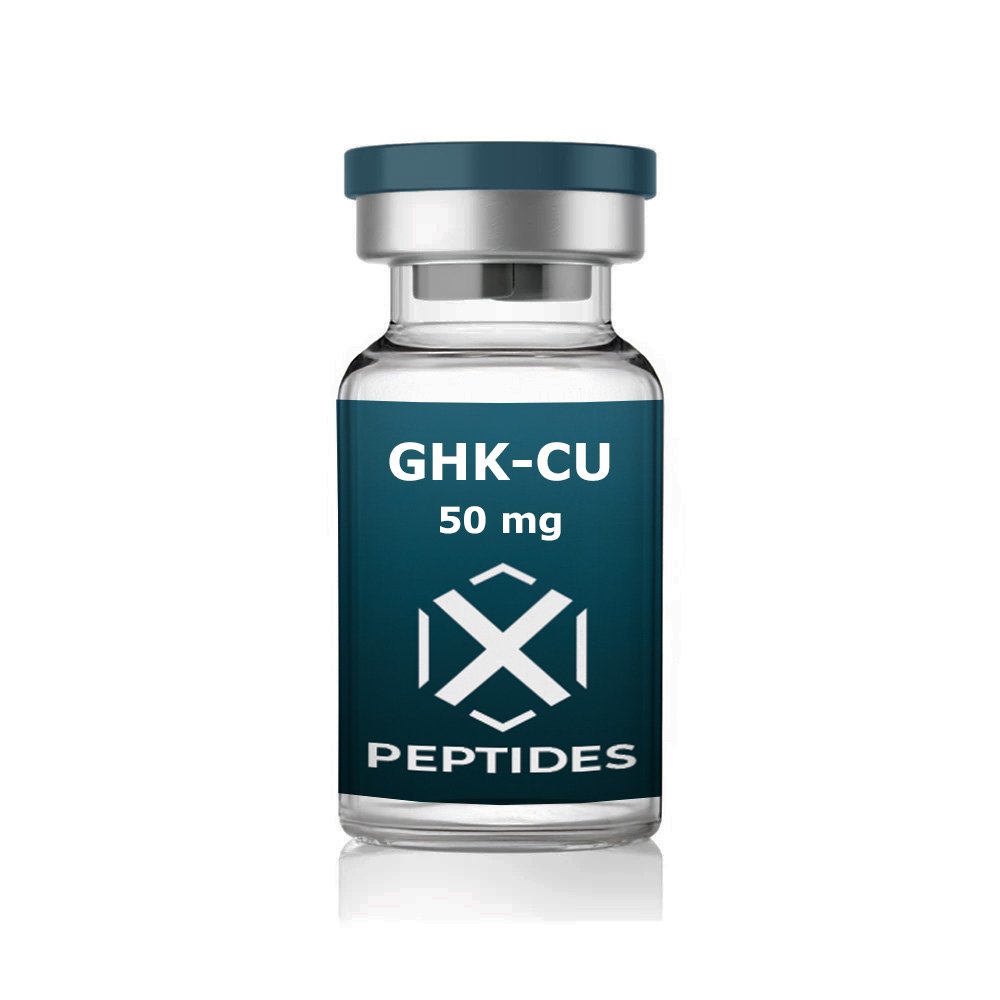
Searching for GHK peptide Australia or copper peptides Australia can bring together listings that use related names but describe different presentations. Before comparing prices, identify the exact material and format. A familiar abbreviation is useful for finding a product, but it is not a complete specification for laboratory procurement.
This guide focuses on reading GHK-Cu listings and preparing a clear research enquiry. It does not recommend a treatment, personal-use protocol or preferred format for human use. Start with the GHK-Cu product page, then compare its named quantity and available information with the requirements of your own laboratory.
What does the name GHK-Cu identify?
PubChem’s prezatide copper entry includes GHK-Cu and copper tripeptide-1 among its associated names. That provides a useful reference point when checking terminology. It does not establish that every item using a similar name has the same supplied form, specification or supporting documentation.
Keep the full designation in the purchasing record. If a listing uses only GHK, ask whether it identifies the same material intended by the complete GHK-Cu request. If a particular molecular form, counterion or composition matters to the work, request the relevant specification rather than deriving it from an abbreviated title.
A vial and a spray are separate product descriptions
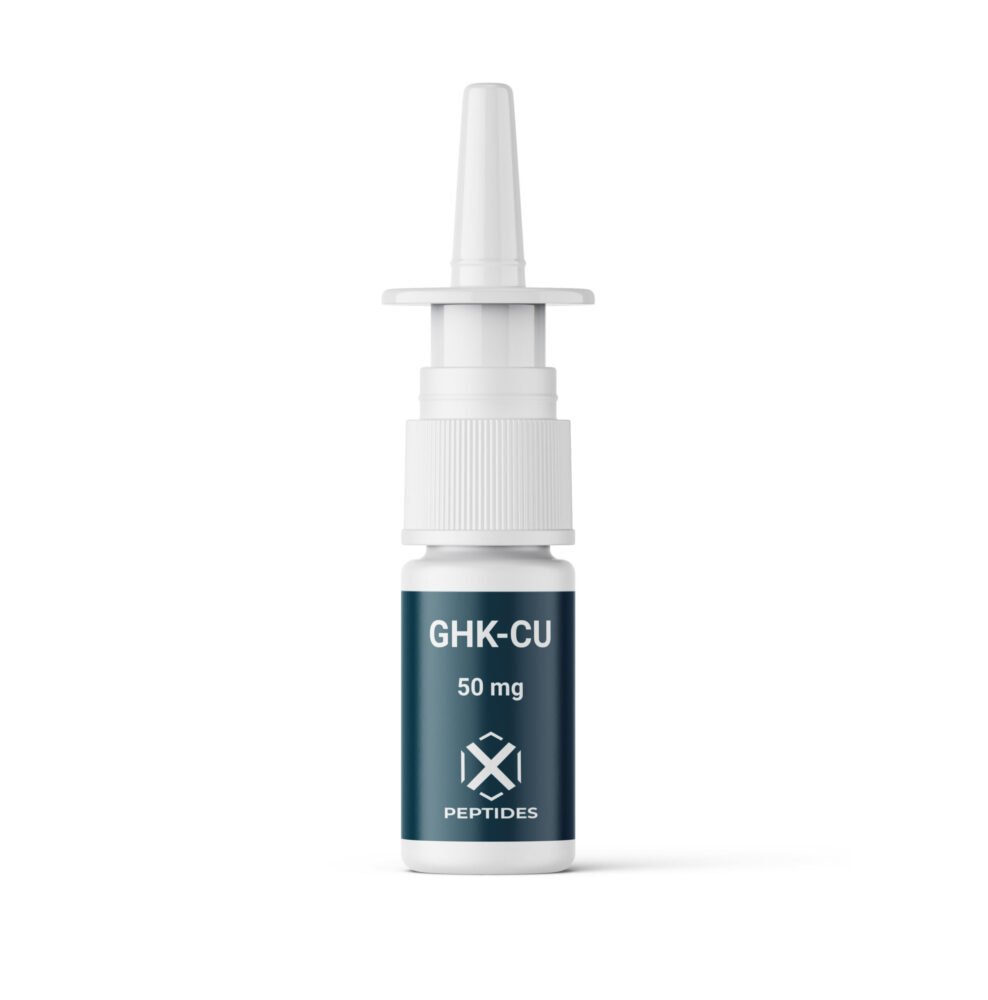
A vial listing and a spray listing should be reviewed as different presentations. Check what each page states about total compound amount, container volume and any available formulation details. The word “spray” alone does not establish the quantity delivered per actuation, and the word “vial” does not establish how material should be prepared.
Compare the GHK-Cu vial listing with the GHK-Cu spray listing by writing down the information each one explicitly supplies. Keep unknown fields marked as unknown. Where a specification is essential, clarification from the team is preferable to assuming that two presentations can be substituted for one another.
Read the quantity and units together
Mass and liquid volume describe different properties. A figure in milligrams is not, by itself, a concentration. A concentration calculation also needs the relevant final solution volume. Similarly, a total quantity in a container does not automatically establish how much is present in every smaller research sample.
For a purchasing comparison, first identify whether the product page gives the total amount, a concentration, a per-item quantity or several of those details. If the wording is ambiguous, quote the exact listing in your enquiry. Avoid building a calculation around a value whose meaning has not been confirmed.
Check the documentation for the actual GHK-Cu item
Ask what records are available for the product and relevant batch. Confirm that the identity in the document matches the material under consideration, rather than assuming that a certificate labelled with a broadly similar name applies to every copper-peptide listing. Keep the selected format and product option attached to the request.
The peptide purity and COA guide explains how to review the scope of a report. A database entry, a catalogue photograph and an analytical document have different roles. None should be presented as though it independently verifies the others without a clear link to the actual supplied material.
Keep blends separate from standalone listings
If GHK-Cu appears alongside other named compounds, review the complete composition. Record each component and its individual stated amount. A blend’s combined quantity should not be compared directly with the amount of GHK-Cu in a standalone product as if both figures described the same thing.
The same principle applies when comparing another named complex. A different product designation should remain different in the record unless its equivalence has been established by the information your laboratory requires. Product searches can group terms loosely; procurement should make the intended identity explicit.
Prepare a useful Australian order enquiry
Include the full product name, selected option, format and required quantity. Add the documentation you need before approval and the actual receiving suburb, state and postcode. Ask for order-specific availability and delivery information instead of assuming that an Australia-focused listing means local stock or a fixed arrival time.
For larger quantities, use the bulk enquiry checklist. To compare a supplier’s response, use the supplier-comparison guide. You can also browse the vial category and spray category while keeping each product’s own specifications separate.
Frequently asked questions
Does “copper peptides” describe one fixed product?
Do not use the broad search term as a complete specification. Confirm the exact named compound, supplied form and quantity. A category or keyword can help navigation without establishing that all resulting listings are equivalent.
Can I infer stability or preparation conditions from the name?
No. Request product-specific information and follow your laboratory’s validated approach. This comparison guide does not determine storage conditions, solvent suitability or an experimental protocol.
Where can I ask a question about a listing?
Use the contact page and identify the product and option you mean. A precise question about a missing specification is easier to resolve than a broad request for the “best copper peptide”.
Research use only. This article discusses product information and laboratory procurement. It is not medical advice, a personal-use protocol or a statement of regulatory approval. Research-labelled products are not intended for human or veterinary use.