Reta peptide Australia is a common style of search phrase, but reta is shorthand rather than a complete product specification. Readers may use it when looking for information about retatrutide. A seller may use a different abbreviation or code. Neither a search term nor a short label authenticates the contents of a vial.
This article explains how to separate names, research status and documentary evidence. It is not a purchasing recommendation or a personal-use guide. The regulatory information below was checked on 20 October 2026 and should be checked again against official sources before relying on it.
Start with the full name
When a page uses reta, RET or another short code, ask what complete chemical identity is being claimed. Do not fill in the answer from an image, customer comment or similarly named listing elsewhere. Record the exact wording supplied, along with the formulation, stated quantity, manufacturer and batch reference.
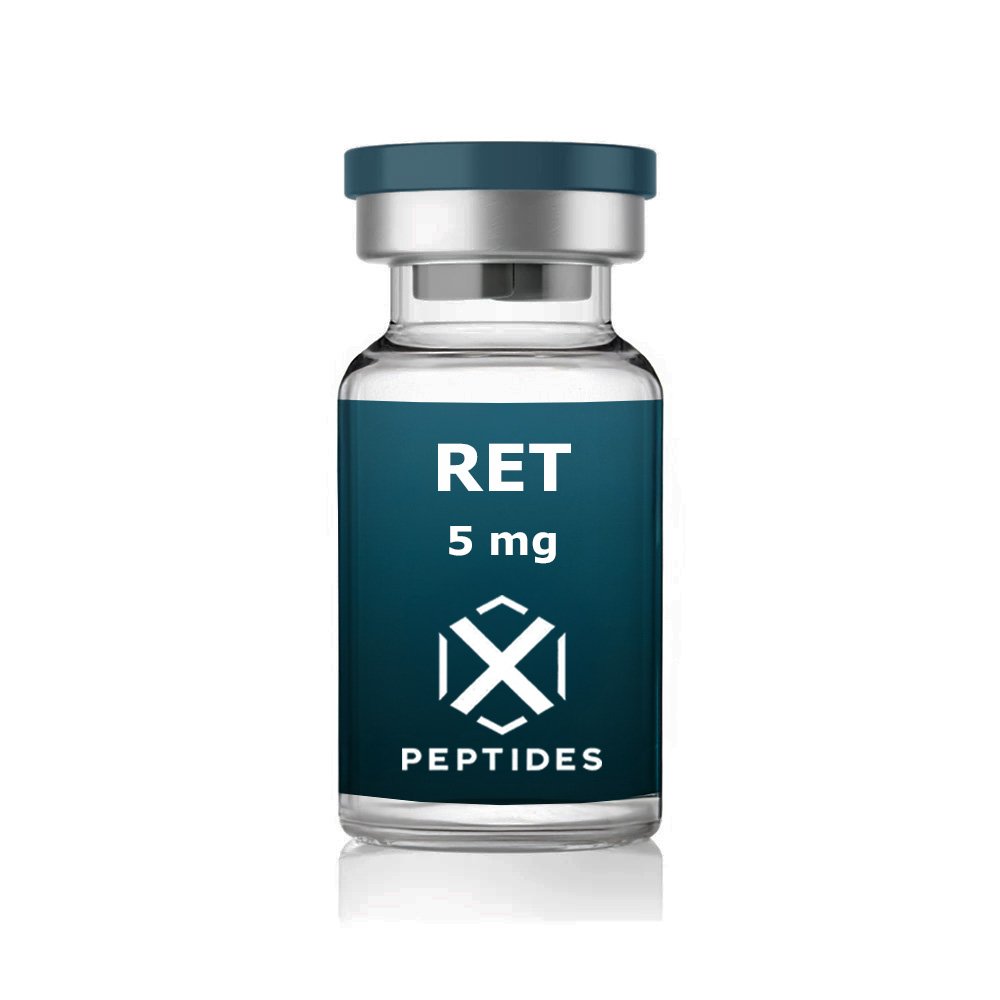
The photograph below is an existing catalogue image carrying an abbreviated label. Its inclusion illustrates the identification problem; it does not independently confirm retatrutide identity or endorse the product. Readers should not infer a complete identity from the letters on a catalogue photograph.
What is the current Australian status?
In its 14 September 2026 retatrutide safety alert, the TGA states that retatrutide remains under clinical investigation and has not been approved by the TGA or a comparable international regulator. It advises against use outside a clinical trial setting.
The same alert describes a tested product sold as retatrutide that contained undeclared semaglutide and no retatrutide. That finding concerns the product investigated; it does not establish the contents of every product using similar terminology. It demonstrates why a name on packaging cannot substitute for reliable identity evidence.
Research status is different from catalogue availability
A product appearing on a website does not mean it is an approved medicine. A research-only disclaimer does not establish permission for personal treatment. Likewise, a discussion of a clinical trial does not make a separately sold online product equivalent to the material used in that trial.
The TGA's therapeutic peptide regulation guidance explains that disclaimers do not remove applicable regulatory obligations. Our Australian peptide legality guide provides a framework for checking the actual product and activity rather than relying on broad claims about legal research peptides.
What evidence answers an identity question?
An identity question asks what the tested material is. A purity question asks about a particular measured characteristic under a particular method. A report can be useful only when its sample reference, methods and results can be connected to the relevant material. A high percentage on an unrelated document does not close that gap.
Our peptide testing and certificate guide explains how to read these records. Retain the original document and note who issued it, which sample it describes and whether any important qualifications appear. Do not treat a screenshot with cropped headings or an unexplained batch number as a complete record.
Avoid drawing conclusions from appearance
Vial colour, label layout, powder appearance and packaging style are not chemical identity tests. A professional-looking image may make a page easier to read, but it cannot establish the ingredient, amount, purity or absence of contaminants. The same limitation applies when an image is copied across several listings.
For a structured comparison of what suppliers disclose, see our supplier comparison guide. For comments about delivery or customer service, use the separate approach in our supplier reviews guide. Those subjects can matter to a purchasing process without answering the scientific or regulatory questions.
Imports require their own assessment
Do not interpret overseas availability or a seller's shipping promise as evidence that importation into Australia is permitted. The exact goods and proposed activity need assessment under the relevant requirements. A code-only invoice or unclear label creates an unresolved identification problem rather than a shortcut through it.
Our Australian peptide importing guide links to current official information. It does not provide a method for obtaining an unapproved medicine or avoiding controls. Anyone considering personal treatment should discuss approved options with an Australian registered health practitioner rather than using a research label as a basis for self-administration.
How to read claims about experimental materials
Separate a claim about a molecule being studied from a claim about a particular container being sold. Ask whether the evidence identifies the actual goods, supports the precise statement being made and is relevant to the intended context. A citation beside a sales description may concern a different formulation, study setting or material.
Do not convert preliminary research into a promise of results. Do not assume that a customer testimonial verifies a mechanism or confirms identity. When a page does not distinguish research discussion from product claims, preserve that uncertainty instead of supplying the missing evidence yourself.
Questions that remain useful
What full name is being claimed? Which documents identify the batch? Has the current regulatory position been checked independently? Are product identity, analytical evidence and legal status being kept separate? If a material question remains unanswered, a confident headline should not resolve it.
For other examples of ambiguous terminology, see our HGH and fragment naming guide. Use the contact page for factual catalogue questions only; a seller's explanation cannot authenticate all material or replace a regulatory determination. This article intentionally provides no dosing, mixing, injection or treatment instructions.
Information checked 20 October 2026. This article does not establish product approval or authorise a transaction. Consult current official sources and qualified advice for your circumstances.